A guitar strap is easy to overlook. It is often the cheapest item in a guitarist's kit, yet it affects how comfortable you are, how well you play standing up and whether your instrument stays safe. With festival and gig season approaching and more time spent rehearsing on your feet, it is a good moment to check that your strap is up to the job.
What to look for in a guitar strap
Straps vary more than you might think. These are the main points to consider:
- Width. Wider straps spread the weight of the guitar across a larger area of your shoulder. A narrow strap may be fine for a light guitar, but a heavier electric or bass is usually more comfortable on a wider one.
- Material. Nylon and polyester are light, durable and affordable. Leather is sturdy and tends to grip your shoulder, so the guitar moves around less. Some straps add padding for long sessions.
- Adjustable length. Make sure the strap adjusts far enough for your height and preferred playing position. Very tall players and those who like a low-slung guitar may need an extra long strap.
- Strap ends. The ends that fit over the strap buttons should be firm and the holes snug. Thin, worn or stretched ends are the most common reason a guitar slips off.
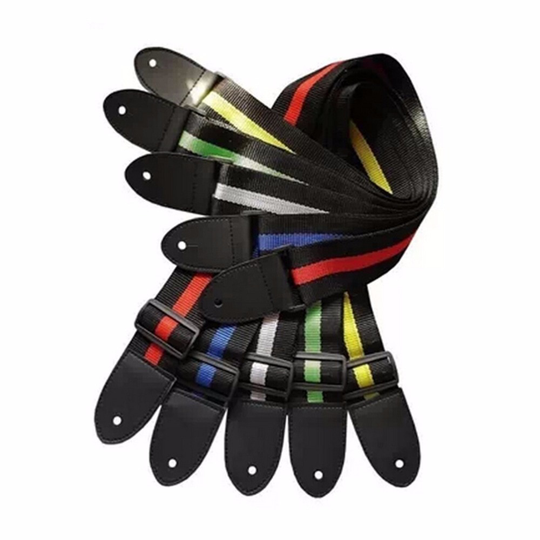
You can browse different styles in our guitar straps section, from simple nylon straps to more decorative designs. This adjustable nylon strap with leather-look ends is one straightforward option.
Finding the right playing height
Rock guitarists are famous for wearing their guitars low, and it can look great on stage. But a very low guitar puts your fretting wrist at a sharp angle, which makes difficult passages harder to play and can be uncomfortable over time.
A good starting point is to set the strap so the guitar sits at roughly the same height standing up as it does when you play sitting down. That way, the techniques you practise at home transfer directly to the rehearsal room. From there, adjust a little at a time until you find a balance between comfort, control and style. If you feel strain or pain in your wrist, shoulder or back, take a break and try a different height.
Strap locks and other ways to keep your guitar safe
Dropping a guitar can crack the finish, snap a headstock or damage the tuning machines. A few simple precautions reduce the risk:
- Use strap locks. These replace or add to the standard strap buttons and hold the strap ends in place. Some types need the guitar's strap buttons to be swapped, which a technician can do if you are unsure.
- Try rubber strap blocks. Small rubber washers pushed over the strap ends are an inexpensive alternative to full strap locks.
- Check the strap buttons. If a button feels loose, it can be tightened or refitted. Do not ignore it.
- Replace worn straps. Look for cracked leather, fraying stitching and stretched end holes.
- Take the guitar off carefully. Lift the strap over your head rather than letting the guitar swing, and put the instrument on a stand or in its case rather than leaning it against a wall or amp.
A small upgrade worth making
Many players keep the strap that came with their first guitar for years without a second thought. Swapping it for a comfortable, well fitting strap with secure ends is a low cost way to make standing practice more enjoyable and protect an instrument you care about.
And if you need some inspiration for what to play once you are strapped in, take a look at our guide to the best Finnish rock bands.