Every guitarist knows the feeling of putting on a fresh set of strings: the bright attack, the ringing sustain and the way chords suddenly sound clearer. Rock music in particular, from heavy riffs to crisp lead lines, relies on that punch. Over time, though, strings lose their spark, and many players keep using them far longer than they should. So how often should you actually change your guitar strings?
Why strings wear out
Guitar strings are thin lengths of metal under constant tension. Every time you play, sweat, skin oils and dirt from your fingers end up on the strings. Moisture in the air adds to the effect, and over weeks the metal begins to corrode and the windings fill with grime. Repeated bending and fretting also cause small amounts of wear where the strings press against the frets.
The result is a string that no longer vibrates as freely as it did when new. You hear it as a duller tone, and you feel it as a rougher surface under your fingers.
Signs it is time for a new set
Rather than going purely by the calendar, listen to your guitar and look at the strings. Common signs include:
- Dull or flat tone. The guitar sounds muffled, with less sparkle on the high end and less sustain.
- Trouble staying in tune. Old strings can stretch unevenly and refuse to settle, especially when you bend notes.
- Intonation problems. Chords further up the neck sound slightly out even though the open strings are in tune.
- Discolouration. Dark spots, rust or a grey film, especially on the underside where you press the strings.
- Rough feel. Strings feel gritty when you slide along them.
- Kinks or a broken string. If one string snaps, the others are often near the end of their life too.
A rough guide to timing
There is no single rule, because it depends on how much you play, how your hands react with metal and the climate where you keep the guitar. As a general guide:
- Daily players often change strings every few weeks.
- Regular hobby players who play a few times a week may get a couple of months from a set.
- Occasional players should still change strings at least a few times a year, as strings age even when the guitar sits in its case.
- Gigging musicians commonly fit a fresh set before an important show or recording session, ideally a day or two in advance so the strings have time to stretch and settle.
Coated strings are designed to resist dirt and corrosion, so many players find they last longer, although they can feel slightly different under the fingers.
Choosing your next set and making it last
When you buy new strings, check that they suit your instrument: electric guitars need strings made for magnetic pickups, while classical guitars use nylon. Gauge is the other key choice. Lighter gauges are easier to bend and kinder to beginners' fingers, while heavier gauges give a fuller sound and suit lower tunings, which are common in heavier rock styles. If you change gauge significantly, your guitar may need a small setup adjustment.
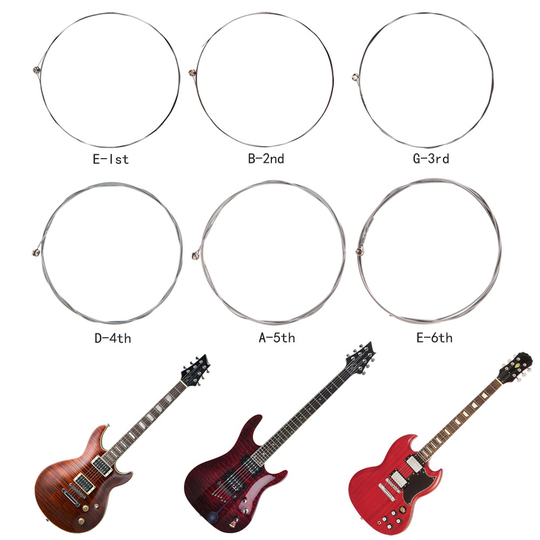
You can compare sets in our guitar strings section, for example this EW series electric guitar string set.
To get the most from every set:
- Wash and dry your hands before playing.
- Wipe the strings with a dry, lint free cloth after each session.
- Store the guitar in a case or gig bag, away from radiators and damp rooms.
- Keep a spare set in your case so a broken string never ends a practice session or rehearsal.
Fresh strings are one of the cheapest upgrades you can give any guitar. Get into the habit of checking them regularly, and your playing will always sound its best.